

Fight Club
 )
 )
Couldn't load pickup availability
THE FIRST RULE about fight club is you don't talk about fight club.
Every weekend, in the basements and parking lots of bars across the country, young men with whitecollar jobs and failed lives take off their shoes and shirts and fight each other barehanded just as long as they have to. Then they go back to those jobs with blackened eyes and loosened teeth and the sense that they can handle anything. Fight club is the invention of Tyler Durden, projectionist, waiter, and dark, anarchic genius, and it's only the beginning of his plans for violent revenge on an empty consumer-culture world.
Share
Book Details
- ISBN
- 0393039765
- Binding
- Hardcover
- Authors
- Chuck Palahniuk
- Publisher
- W. W. Norton & Company
- Published Date
- August 17, 1996
- Language
- English
- Pages
- 208
- Physical Info
- 0.85 in H x 8.61 in L x 5.84 in W (0.86 lb)
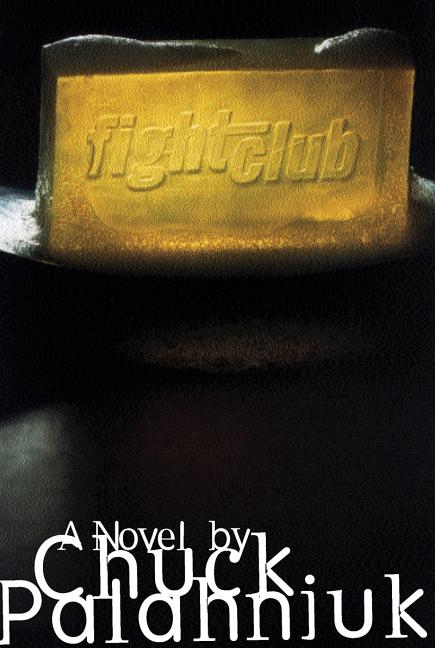
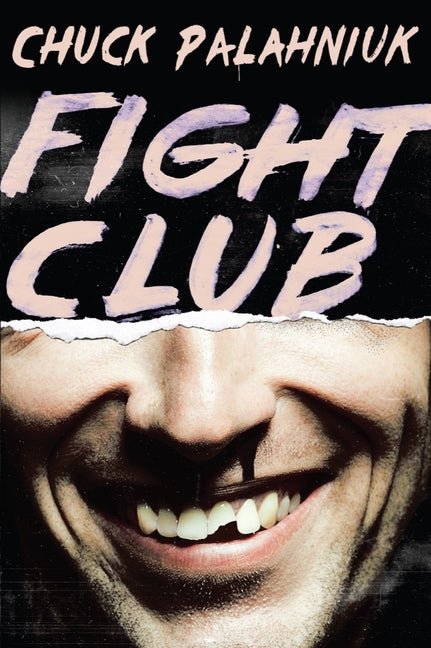
Got for my daughter. She loved it!
I am very happy with your product. Thank you.
First rule of Fight Club reviews is we don't talk about the Fight Club reviews... If you've seen the movie, read the book. If you've read the book, see the movie. If you've done both, then you know what I'm talking about. This book is ground-breaking and probably one of the best books written in the last 100 years... not the easiest read because Chuck doesn't tell a straight-forward story, but that's part of the fun.
One of, if not the greatest work of fiction. The film is f*****g great also, which you cant 5 star both book and film often. Bravo every one involved but especially Ol' Chuckles.
Came in perfect condition :)
- 5 stars: 12 (60%)
- 4 stars: 8 (40%)
- 3 stars: 0 (0%)
- 2 stars: 0 (0%)
- 1 star: 0 (0%)
Got for my daughter. She loved it!
I am very happy with your product. Thank you.
First rule of Fight Club reviews is we don't talk about the Fight Club reviews... If you've seen the movie, read the book. If you've read the book, see the movie. If you've done both, then you know what I'm talking about. This book is ground-breaking and probably one of the best books written in the last 100 years... not the easiest read because Chuck doesn't tell a straight-forward story, but that's part of the fun.
One of, if not the greatest work of fiction. The film is f*****g great also, which you cant 5 star both book and film often. Bravo every one involved but especially Ol' Chuckles.
Came in perfect condition :)
Just as amazing the 10th time as the first. Definitely a must read for anyone. The first rule of fight club……
Great book!! Everyone should read this. Good for teenagers or older.
I asked my gf if she had any book recommendations for me, and she mentioned this book. I have never seen the movie and honestly had no idea what the story was about, so I was reading this book completely blind!! I did NOT like this book the first several chapters. I just didn't understand why the main character and was listening and following the other character around like he was! BUT THEN, once you know, it changes everything! I LOVED this book after that! Yall who like this book know what I'm talking about, but once you get to THE PART, it makes you want to read the entire book over again! I'm very happy I have it in my collection now. If you like crazy and psychological thrillers, then I recommend reading this book. Take it from a sceptic who would have NEVER read this book if it weren't for my gf. She told me to read Choke next, by the same author. That will be next months book!
First things first: Palahniuk has a profound gift for language. His writing is poetic and punchy (no pun intended). Some reviewers have complained that Fight Club is difficult to read because Palahniuk doesn’t tell a straightforward story in a straightforward way, but I love a novel that forces me to do some of the work. Palahniuk lays out the dots and tells us to connect them. He sets a pace and demands that we keep up.Palahniuk is also a master storyteller. The plot of Fight Club unfolds incrementally, at just the right pace. Pieces gradually click into place until everything gels at the end—and blessedly, Palahniuk knows exactly when that end should come. He doesn’t drag out things for hundreds of superfluous pages. His writing style is as spare and fit as his characters.That said, I’m not sure how well Fight Club has aged. That’s not because of any “un-PC” elements in the plot (although those definitely exist). It’s more because of the book’s fairly naive view of how the world works and how it can be changed.Fight Club purports to be—at least to some degree—a response to capitalism and consumerism and their “emasculating” effect on society. It’s no stretch at all to compare the community of men created by the book’s fight clubs to today’s real-life Proud Boys. Like Tyler’s “space monkeys”, the Proud Boys have generated attention and taken some action, like helping to launch a failed coup of the US government on January 6, 2021. But ultimately, the actions of both groups—the space monkeys and the Proud Boys—seem like futile, misguided attempts to reclaim some fabled masculine identity.If the book were written today, all of Tyler’s explosive know-how would have to be channeled into screen-friendly social media campaigns. The Proud Boys have shown that, at least in America, brute force alone can’t compete with the power of influencers, the vast budgets the fuel consumer culture, or the other complexities of capitalist society.
Chuck Palahniuk showed himself to be his generation’s most visionary satirist in this, his first book. Fight Club’s estranged narrator leaves his lackluster job when he comes under the thrall of Tyler Durden, an enigmatic young man who holds secret after-hours boxing matches in the basement of bars. There, two men fight "as long as they have to." This is a gloriously original work that exposes the darkness at the core of our modern world.I decided to read this book as though I’ve never seen the movie and am going to write my review as such. What the hell did I just read? This book was crazy from start to finish. The writing is impeccable and the story is gritty, dirty, and insane. It’s uncomfortable at times but not enough to make you want to stop reading. No, you definitely want to finish it, just to see what the hell happens in the end. How could this story come to a close?The narrator (unnamed throughout the book) hates his life, hates his job, hates basically everything. Everywhere he goes, he hopes something bad will happen that will take him out. He suffers from insomnia. He goes to different support groups to feel better about his life. One day he meets Tyler Durden and his whole life changes. Tyler’s clearly insane but he’s so charming that you can’t help but go with everything he says. Until Tyler gets a little too insane and the entire life of the narrator is coming unraveled. Perhaps everything isn’t quite as it seems?While I did like the story overall, it’s mostly because of the writing. I did not like the narrator at all. I think he’s petulant and self-indulgent. We get it, you hate your life. Do something about it. Don’t just complain. It’s not up to “the man” to change your life and it’s not their fault you’re a loser. Going through life creating destruction isn’t going to make your life better.This book definitely is not for the faint of heart or stomach. If you’re sensitive at all, this book probably isn’t for you. But if you’re into a gritty story with a super unreliable narrator, this might just be the story for you. I said the writing is amazing. The story set up is great. It really is a super interesting concept. Don’t let my opinion of the narrator sway you.
The central idea of the novel, “Fight Club”, is that aggression is an expression of the repressed subversion of the individual against systematic violence in a society where economic exploitation of the section of society has become institutionalized. Indeed, this literary work has affective appeal and quintessence of portrayal since Chuck Palahniuk shows how violence can truly be liberating as an experience. This cult novel goes on to utilize plot, characters, setting so as to bring out the effect of the story and the portrayal. The author uses the theme of the novel to engage the audience and portrays the central content in the face of systematic violence of society. The author portrays duality of human existence via the characters and society so as to present the intertwined relationship between violence and peace.“Fight Club” is one of the most significant works of literature that resonates in the minds of the readers with the sheer idea of radical societal transformation. This transformation could bring immense change in global society where people presently suffer from the economic hardships and economic system. The author goes on to intertwine the plot, characters and setting so as to manipulate the readers into getting totally engaged to the narrative of the story only to understand how radical the film is in its idea and portrayal of the potential of inner duality of a common man. The cinematic adaptation has only worked to popularize the work of art to the world audience transcending the barriers of culture and communities. Indeed, “Fight Club” is one of finest works of art that talks about societal issues, seeks the identity of the individual, and dares to empower the commoner to be subversive about the entire societal system that is in prevalence. The literary work is truly an exploration of human identity.
When i first saw the movie, i hated it. It spewed out a two-bit philosophy while repeatedly punching us in the face with absurdism. I still detest the movie, but after getting into literature i keep hearing about this novel and believed it would be interesting. At the very least, i can read it and say that i dislike th book for the book but not because of the movie.Essentially, this is about a man who desires meaning from his life and fromhis work, and it causes him to have insomnia. He attends support meetings to relieve symptoms, and it works until an altercation with marla singer. Then he starts fight club with his new friend tyler durden to seek meaning in life. Only it gets wildly out of control and becomes a terrorist organization bent on burning civilzation down to carve out the imperfect qualities.Whoa, that escalated quickly. My initial surface impression is its a bunch of dudes who are dissatisfied with their lives and they externalize their anger and harm others. I thought it boasted the worst qualities of masculinity, the self ish destructive side. Qualities i find abhorrent.Now i have a much more mature view of literature, i realize now that the movie was critquing masculinity, in looking at its extreme side, it exposes it.Now the novel, i feel, looks more at dissatisfaction with life and work our capitalist culture. The people who were angry to be left behind by this world, combat it by doing the same. They spew a cheap philosophy, and literally package humanity in the form of soap and sell it back to the people. And you could argue that its a meaning the narrator made for himself, but it isnt. Tyler durden made it up, and he isnt real. From there, it seems like the members are really part of a pseduoreligious cult. The same as they were at their lousy jobs.Chuck says he focuses more on theme than character, ans thats obvious, but the character still has substance. He ultimately reconciles the two distinct halves of himself and becomes a more complete person.I read it and loved it. Maybe you will too.
Fight club is the novel of which the very famous movie of the same name is based off of. Fight club follows the character simply known as "The Narrator" and his awakening to his new world of "Fight Club". The Narrator works at a car recall service and is depressed with his life. He has had no real fulfillment in his life and suffers from Insomnia. He fills his apartment with furniture and decorations and thinks this makes him "happy" and fills the void, but it's not enough. One day his doctor recommends him to join Support groups for different types of cancers and diseases. He joins these so that he can act like he's about to die and he can truly cry in other peoples arms. He starts noticing something fishy about these meeting he keeps on seeing the same women at different meetings. She is Marla Singer the women who sets The Narrator down his path. His cure to insomnia was only temporary as he starts to not sleep again. One day on a business trip he meets a man named "Tyler Durden" the man who changes his life. Tyler shows him the ways of living by creating Fight Club. A place where men can fight for however long they want to achieve emotional and physical release. The story evolves much more than that but it would start getting into spoiler territory. This is one of the very few instances where the movie is better than book, But the book also has elements that are better than the movies. The book explains better of who Tyler is and how he does what he does and it's a lot more darker and more satirical than the movie actually is. The book also satirizes more elements than just consumerism and life. Like the whole stop living in the past and look towards the future. The flaws I see in the book mainly have to do with the characters and the ending. The characters are, for the most part, are 1 dimensional. The only character that has an arc is The Narrator. Tyler is just the has-no-care free roamer and the book ends with him being the same way. Now in this type of book you wouldn't expect much devolopment but I saw Tyler, quite literally ;), as an emotion that's just there to cause havoc. Now the ending... The last 3 chapters are almost non-existent, here's how to goes. 1. We need to get to this building in all this traffic, 2 pages later, oh look were here now we need to stop him, 3 pages later, oh look we stopped him, last chapter oh look it's over. It ends so abruptly that you feel no tension when you're reading the end and I was like "well that just happened" and it's over. Over all I'd give fight club a 4 and 1/4 just because the characters aren't really characters and the ending.
The first rule about Fight Club is you don’t talk about Fight Club, but I am going to anyway (or at least the novel ).Chuck Palahniuk is the author with the unpronounceable last name who penned the wildly successful “Fight Club” nearly 20 years ago. The book has taken on something of a cult status in dark corners of the reading world, due in large part to the movie of the same name starring Brad Pitt.MY IMPRESSION“Fight Club” is a fistful of fun and an enjoyable read that will punch you in the face. KA-POW! **Spoiler Alert** What Palahniuk has done is provide a modern take on “The Strange Case of Dr. Jekyll and Mr. Hyde” that Robert Louis Stevenson gave the world back in 1886. In the middle of FC we learn that the mild mannered desk clerk and the wild founder of the underground fight clubs and Project Mayhem are the same person. Palahniuk does a good job of masking it, but ultimately the foundation of originality in the dissociative personality trait stuck in a novel rests with Stevenson.The originality in FC is found on the surface in the fight club concept and the plans of Project Mayhem. Readers also learn all they ever wanted to know about making soap from the extracted fat of the rich and how to sell it back to them. And who in their lives hasn’t longed to have that knowledge bouncing around in their brain? There is also a love story going on in the novel. I was surprised as anyone in reading the afterword by the Palahniuk when he claimed that the novel is a romance. Does it belong on the shelves next to pink-covered Joan Collins novels? I’ll let you be the judge.I RECOMMEND IT“Fight Club” is not a perfect novel and what piece of art is, especially when it is a first novel? There are the little annoyances like quote malfunction in the form of the opening quote being reversed. This may be from the print to ebook conversion, but who knows? Maybe it’s High Art.I recommend this wild read of a novel. It has action, pithy text, original surface contexts and a love story. “Fight Club” is, after all, a “romance.”#FightClubReview #BestBooks
After having seen the movie for the hundredth time, I was adamant about picking up the novel that started it all. I had the DVD copy, obviously. I also had a MacBook Air that didn't have a DVD player, obviously. And on the day I decided to watch it for the nth time, I was s*** out of luck. This was the moment I picked up the novel.I'm giving it five stars because it was so much better than the movie. For those who say the movie was better has a bias towards Brad Pitt's abs. In fact the movie did the book justice but to say it was better than the book doesn't give Chuck Palahniuk justice.What I love about the book is the way the little hints point out to Tyler's real identity. Just like in the film, there were clues everywhere. "I know this because Tyler knows this." Also because I love psycho thrillers. Haha.I also loved how it's also about romance. Marla Singer also didn't strike me the way Helena Bonham Carter portrayed her to be. And in some way the support groups played a much bigger role than I expected it to be, having been a favorite of this story through the film. Also that scene in the car, I love that it was carried out by the mechanic instead of a Tyler Durden projection.I know, I know. I'm basing most of my comments here as a response to my expectations about having seen the film countless of times. The thing I'd like to say is, if you're like me and have any of the same hesitations about reading the book, you shouldn't. If you love the film that much, you owe it to yourself to read the novel. And if you haven't read nor seen the film, I urge you to read the book first. Don't let Brad Pitt's abs or Jared Leto's angelic face tempt you. :)
REVIEWSHaving watched the movie was the strongest reason why I didn't feel the need to read the book. It always bumped in my mental vault, the fact that someone had come up with such a powerful and compelling idea, executed it impecably on screen (Norton's and Pit's acting was phenomenal; perhaps Pit's finest performances). I finally gave the book a try. I was surprised to see that the book was short. It didn't put me off at all, it was just an observation, especially after having watched the movie I expected a lengthier book.As I read through the pages I was aware of the nuances with the movie, something that made my neurons glitch from time to time, for I expected one thing, yet found something else. Yet, Palahniuk's mastery of his unique style and narrative kept me reading and reading, constantly trying to decipher why the writing style was so good and so bold and so... damn original.The story itself is strong, consistent to the bone and detail oriented without being overwhelming. I figured Fight Club was very successful because it defined a putrid, rotten world that exists within the human realm. Fight Club gave this world a face, a personality, a tangible morphology we could finally grasp. This world occupies the mind of the bluest, the raw material of hatred towards the organized, paved by those who seek to control through the creation of rules that determine a beings reality. This reality has a big blind-spot, and the world Palanhniuk described in Fight Club defined this blind-spot and exploited it. This blind-spot is an individual's need to feel unique, and yet, the opposing desire to feel he is part of a movement, a group, to be part of a collective. To be part of Fight Club one had to slay one's reality, to lay naked midst the ugly and emerged reborn, only to join a new set of dogmas. This is portrayed as the idea of propagating organized-chaos, an idea that spread through the mediocre like a virus. The virus lived among society cloaked under the veil of working men, men who seemed to follow a set of social rules; the virus unveiled during the night, during Fight Club. An integrant of Fight Club was a menacing soul in search of freedom, from social expectations and the boxed-in sensation felt by binding rules of how one must supposedly behave midst peers. The soul within Fight Club sought freedom, even from itself, only to be lured by its desire to belong, to be part of the clan: the paradox of wanting to be unique and yet, the inevitability of desiring to be part of cult, to be part of the change. Man's demise is served cold in Fight Club, for example, when Tyler makes soap out of fat rendered by liposuction--society's shame--, sold back to the thinned as soap, purchasing what once was thought as biological waste, now regarded precious and a standard of "high society".To leave aside the story, I would like to mention Palahniuk's writing style. To achieve the deliverance of a message so profound, in such a raw manner, using short sentences and explicit imagery is indeed a literary achievement. I truly enjoyed this read, far better than watching the movie. The movie, however, is also an achievement in itself.
Somewhere in a dark dank basement in your town; men are beating each other to a bloody pulp in order to prove that they are not their job title, bank account, SUV, or IPhone.Before the movie would make it a cultural sensation, spawning several real life fight clubs worldwide, there was the book. Author Chuck Palahniuk's first effort would turn out to be a knock-out punch. He admits in the afterward that he was paid a mere $6,000.00 for the manuscript. I hope he's getting paid hand over fist now.Like most people I didn't know there was a novel until after I had already seen the movie. Fear not, you can still enjoy the book even if you saw the movie and know the twist. The printed story has a different ending.So why is Fight Club so important? Face it, we're set up from childhood by being told that we're special, we're important, we're number one, we can be anything we want to be, etc. Eventually you realize that the contrary is actually true, we're all pretty insignificant. If said realization doesn't drive you insane or into a deep depression; you accept it and go on to make the most of your mundane life. America is such a commercial advertising driven, materialistic culture; always craving the latest gadget, luxury car, or designer clothing item.Tyler Durden understands that the things we own, own us. He aggressively casts off the shackles of corporate, materialistic America and becomes free. He recruits an army of disaffected men thru fight club to tear society down brick by brick so that we will all be truly equal. He may be the most electrifying character in the last 25 years.If you want to find out where it all began, pick up a copy of the novel.
It is pretty rare to find that a movie, when based on a book, that can stay true to the spirit of the book. In this case if you have seen Fight Club (the movie) it is nearly the same as reading Fight Club (the book). In fact, they are so closely tied that I was able to skim parts of the book because I already know the plot so well.Having said that, there ARE differences. If you were a real fan of the movie I think you can gain an even greater appreciation of what they achieved. In many ways I think the screenwriter took the plot of the book and made the movie version even better. I'm not really sure if that speaks well of the novel. Surely Chuck tapped into something quite primal here but I don't think he really did the subject justice or it wouldn't have have been so easy to adapt to a mass market audience.If I were going to highlight all the differences between the movie and the novel it would be a fairly short list. The main difference is the ending which I think was done considerably better in the movie version. In the novel you're left with a really weird ending that could be interpreted many ways. Sometimes that is fine but in this case it almost seems like Chuck just got tired of writing and said "the end, fill in the rest yourselves". The movie version was just a lot more clear and tied everything together really well.In short I'd recommend a read if you enjoyed the movie. Fight Club can be read pretty quickly and I think it only took me about 2 hours to finish it.
Why you Should/Shouldn't Buy this book.The book is a fast and easy read, but a little chaotic at times.I'm quite certain this was done to give the reader an authentic 'feel' for whats going on inside the narrators head.Which it does...But I HIGHLY recommend watching the movie first if you haven't already.It does surprising justice to the book, and lays things out in a much more smooth and linear way.Most of the memorable lines and quotes from the book are included in the movie, and both start off almost exactly the same, only beginning to differ the closer you get to the end.If you hate the movie, skip the book.You'll probably hate the book even more.If you like the movie, you might enjoy the book, but probably won't miss much if you pass on it.If you love the movie, I suggest checking it out for the few extra tidbits and alternate scenarios that didn't make it into the movie.---------------------------*Review of book itself*= Possible Spoilers=Fight club is a great book in that it explores some of the darker sides of society and psychology that most people tend to ignore, or flatly refuse to acknowledge.This forces the reader to think about and examine various concepts about themselves and situations in their lives that may otherwise have gone unnoticed.Many examples of this 'forced self reflection' can be found multiple times throughout the book.Such as in the "Human Sacrifice" and "Near Life Experience" scenarios.However, like anything taken to far, the book clearly demonstrates the consequences of what can happen when any idea, even good ones, are taken to a extreme or cult level. Ultimately reversing any positive affect the prior may have had. Even to the point of working against the goal which it initially set out to achieve.
A contemporary masterpiece. An underground fight club goes from a way for frustrated men to vent their rage over the variety of emasculations they think they've suffered and becomes a stealthy, destructive movement sworn to topple a false and dehumanized consumer culture. In the thick of the anarchism is the mysterious Tyler Durden, who'scharismatic brand of evangelical destruction alternately attracts and repels. Clearly , he is someone you cannot take your eyes off of as he exhorts his troops topull the rug from under the engines of Industry. Chuck Palaniuk's satire is vicious, masterful, a vision of a bloated culture set on the cutting board , inspecting with a dissecting eye.This is the perfect novel of terrorism, and Palaniuk extends the violence aesthetic of Mailer's "White Negro" and the various therapies encouraging the psychically wounded to vent until they heal or when the things that are killing them disappears. In both instances, the aim is to free the body from the sterile consumerism its shackled to and to feel alive, and advocates of this sort of expulsion would be quick to add that the violence assumed in their rants and manifestos is metaphorical only; poetry to make a point. Paulaniuk , though, is having none of this grandstanding equivocation on the point; a male either feels that he's had his manhood commoditized and removed from his being, or he does not, and he's willing to take direct action against the symbols and systems of oppression, or there are complacent with a status quo and, hence, part of the problem.The genius of the novel is the author's decision to take the talk of mortal liberation at face value and to follow the logic. Aggrieved males attacking each other , fighting as hard as they can, blows to the body, the head, the groin meant to help them feel something real and independent of programmed responses and advertised results, and in achieving a bond and formed a community, there becomes the united purpose of bringing down the towers of business, the arrogance of faceless, soulless capitalism. Palaniuk's novel is fiction and it is satire, but it is also potent social criticism and disturbingly presents a mindset of a collective for whom acts of grandscale violence, of terrorism are the only sane action possible because they are the only things one can do that means anything. Fight Club is a rousing, disturbing read.

