

I Know Why the Caged Bird Sings
 )
Couldn't load pickup availability
Here is a book as joyous and painful, as mysterious and memorable, as childhood itself. I Know Why the Caged Bird Sings captures the longing of lonely children, the brute insult of bigotry, and the wonder of words that can make the world right. Maya Angelou's debut memoir is a modern American classic beloved worldwide.
Sent by their mother to live with their devout, self-sufficient grandmother in a small Southern town, Maya and her brother, Bailey, endure the ache of abandonment and the prejudice of the local "powhitetrash." At eight years old and back at her mother's side in St. Louis, Maya is attacked by a man many times her age--and has to live with the consequences for a lifetime. Years later, in San Francisco, Maya learns that love for herself, the kindness of others, her own strong spirit, and the ideas of great authors ("I met and fell in love with William Shakespeare") will allow her to be free instead of imprisoned.
Poetic and powerful, I Know Why the Caged Bird Sings will touch hearts and change minds for as long as people read.
"I Know Why the Caged Bird Sings liberates the reader into life simply because Maya Angelou confronts her own life with such a moving wonder, such a luminous dignity."--James Baldwin
Book Details
- ISBN
- 9780375507892
- Binding
- Hardcover
- Authors
- Maya Angelou
- Publisher
- Random House
- Published Date
- March 5, 2002
- Language
- English
- Pages
- 304
- Physical Info
- 1.09 in H x 8.57 in L x 5.75 in W (0.91 lb)
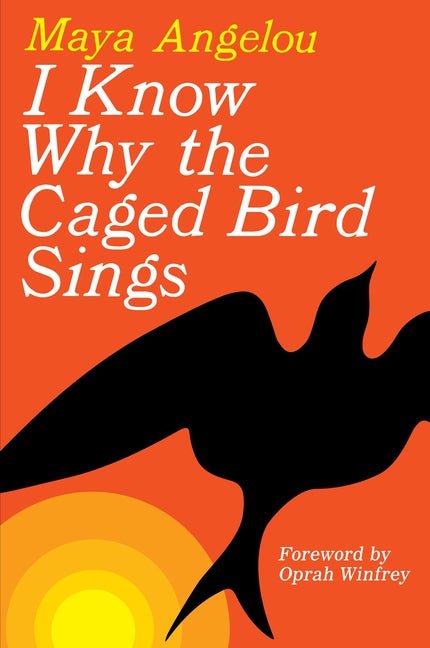
I Know Why The Caged Bird Sings, is a Memoir by Maya Angelou. Like my book, The Real Wakandas of Africa, this book discusses racism in America. The book brilliantly engages the reader with the kind yet honest voice of the author as you experience her life from a child to African American icon. Her memoir is brutally honest and will grip you as you turn through its pages. This book is also available in audio format and were read by Maya Angelou. While she was alive, I had the pleasure of hearing her speak. Her cadence will grab you. Her words will make you think, and you will walk away a different person from this book. I can personally say that after hearing her speak, I was inspired to write some of my first conscious poetry which I continue today in podcast form. She will take you on a journey through her childhood and her life as a poet. Like this book, I also discuss racism in my book The Real Wakandas of Africa. However, I detail the beauty of African history before slavery and colonialism. Prior to slavery and European colonialism Africans built the tallest building in the world which stood as the tallest building for more than 4000 years. Africans performed surgery on the eye to remove cataracts 700 years ago, and conducted cesarean sections in Central Africa with antiseptics hundreds of years before they were performed in Europe or America. They smelted carbon steel 2000 years before Americans or Europeans knew about this process. In the field of astronomy, they charted star systems for hundreds of years before they were uncovered by American telescopes. Africans also built the longest wall in the world for which I also wrote a book called: The Great Wall of Africa: The Empire of Benin’s 10,000 Mile Long Wall. Unfortunately, this history has been ignored by books that discuss racism, and the exclusion of this contributes to the misunderstanding of Black history. Maya Angelou inspired me to in so many ways. She has inspired me to become a poet and author. Her book will keep you engaged and on the edge of your seat! Pick up your copy of her book today!

Great book!!!!
When i first got this book I didn't realize it was autobiographical. It broke my heart for all the tragedy that occurred in her life. I also felt such a sense of pride for her to have overcome such misfortune. Truly a work showing how strong the human spirit is even in the darkest of times.
This is a timeless tale, a masterpiece of literature written by a gifted lady. Mya Angelou made her story dance into my cultural history, memories of childhood experiences and empathy for hardships she experienced. Through it all, she persevered, flying high and free. One word—beautiful!
A beautiful story. I should have read it years ago. A coming of age story I encourage everyone to read.
Maya Angelou is an amazing woman and phenomenal writer with a story I wish everyone would read so that we all could care more deeply for one another, develop more compassion and understanding and try with all our hearts to make this world a safe and loving place for all people.
Very good and intriguing book
I have no other words to describe this work . It made me laugh, it made me cry and it made me think.
Nostalgia enveloped me as I read her story, which all too closely resembled those experienced personally or by those I know. Racism, classism, and abuse are just a few of the challenges faced by black women. These stories, passed down through generations, families’ secrets, and perseverance have become sadly rites of passage for what has become the “black woman” experience. I have never encountered such heartbreaking and life-altering occurrences written so eloquently. The author possesses an extraordinary gift for words. This read was both poignant and a reminder of the history of families and journeys traveled. I cannot help but feel that there is something I have missed, and this book will undoubtedly be a re-read for me.
This book is beyond excellent and eye opening. I will make it my goal to read every single banned book that I can from this day forward.
I read this book many years ago, before the kindle reader was ever a thought. I decided recently that some books are so relevant that they need a second read. This book is such. I’m “lilly white” and had never spoken with a black person until my mid teens when I was enrolled in a school full of people of different ethnic backgrounds. I learned in a very short time that we are ALL of one race, the human race. I detest the term, other race, or different race, it’s simply not true. Love thy neighbor should be the ultimate goal in our treatment of others. I fell in love with and married a man whose skin is black, 47 years ago. I can’t even begin to tell of all the prejudice I witnessed as this occurred in our life together. Maya’s story was immensely helpful to me in the understanding of prejudices and through that understanding I was able to maneuver through my marriage in spite of how others viewed me. Oh to wear another’s skin for simply a day could change so many attitudes in the cruel world.
Wonderful. I really don't know what to say. Maybe I fear saying much as a white woman. I can say that I related to many experiences as a woman and that I held back from crying many times (only because the large majority was spent listening to the audio while driving my daily commute) over the injustices she portrayed.I did not know much about Maya Angelou before reading this first book in her autobiography. I had read some of her poetry and used it in my lessons as an English teacher. When I began, I really didn't even know that this was an autobiography. I just knew that it was a popular book, and as such, I should read it. I try not to think too much about what books are about when they are on so many lists of popular books to read. If it is so widely acclaimed, then I should find some experience contained therein helpful to me in understanding others.I Know Why the Caged Bird Sings is not the first book that has helped me to understand the struggles faced by African Americans, and certainly not the first book I've read concerning women's issues. It is the first non-fiction book on the matter though, not counting a biography of Louis Armstrong that I read the summer before 9th grade for summer reading about which I have forgotten almost everything. Angelou's book reads like fiction, however, which suits me perfectly since it is what I prefer. The knowledge that it is non-fiction, though, set a different tone while I read. I could easily detach myself from books like The Help knowing that it is a work of fiction, purely for entertainment value (though, of course, there is something to be learned). The realism of the book - the honesty of hindsight, the awareness of youth, ignorance, and innocence - brought gravity to a tale that was not a tale. It was still tall, however.Through this book, I became a little more aware that my own life has been safe and sheltered. I knew this before, but reading about another's life reminded me that lives interesting enough for others to read about are fraught with difficulties. My own life might not be glamorous or even memorable, but in a way, that is comforting. This does not stop me from wanting to change anything, though. In my own small ways, I hope to lead a life that makes others' lives more full of joy than of hate. I hope to show those who have experienced even a small portion of the injustices that Angelou faced that times have changed, even (hopefully not "at least") for a white woman from The South.
Here's my review on one of the three books that I've read by Maya Angelou:I Know Why The Caged Bird Sings:Smiling Through SadnessMaya Angelou’s first memoir, I Know Why The Caged Bird Sings, captures the sweetest, purest, and the most honest inner voice of a black child who grew up to be a heroine. Dr. Angelou does not censor anything; She wants us to know it all. It is so true, straightforward, and uncensored that many white parents have attempted to ban this book from schools. This memorable and mysterious autobiography - originally published in 1969 - was followed by another masterpiece entitled: Gather Together In My Name. Both books are available in audio format recorded by Random House Audio. It is amazing that we can hear Dr. Angelou reading her own books to us just like a grandmother putting us to sleep with her adventurous bed-time stories.Dr. Maya Angelou, who has been honored and awarded numerous times, is a pure soul writing about the evil world of the racist America keeping a matching voice on each chapter of her life. When she is writing about her experiences as a five-year-old, you hear a five-year-old talking to you. Being one of the most recognized public figures and a civil rights movement’s heroine, Maya Angelou, gives us a poetic journey of how a poor disadvantaged black girl was rejected by everyone including her own mother, raped by her mother’s boyfriend, and had to witness his crippled uncle hiding under a pile of onions and potatoes to be protected from racist white beasts on a regular basis. The good news is that the story of I Know Why The Caged Bird Sings does not end here. This bird sings her heart out until the cage breaks and she becomes our national treasure.This powerful modern American classis has changed many readers’ (and listeners’) hearts and minds in a way that every great work of literature should. This book became the best-seller immediately after it was published. What added to my personal itch to read this book when I was first introduced to it was the fact that Dr. Angelou has described William Shakespeare as one of her strongest influence on her life and works. Shakespeare is my all-time favorite “pennist.”Buy it, read it, keep it, reread it, highlight it, talk about it, advertise it, buy more of it and give it out as a gift, learn from it, and apply what you’ve learned from it in your daily life. I Know Why The Caged Bird Sings is coming from a heart and soul of someone who had to witness the unnecessary, harsh, and brutal insults that no ordinary human being can bear. Maya Angelou writes the story of a human who was pushed to her limits by the ugliness of this world and while being in a saddest cage, sang the happiest song. Once precious Maya Angelou told her younger generation that seem to be unable to cope with the racism in the past and present:“You should be angry. You must not be bitter. Bitterness is like cancer. It eats upon the host. It doesn’t do anything to the object of its displeasure. So use that anger. You write it. You paint it. You dance it. You march it. You vote it. You do everything about it. You talk it. Never stop talking it.”
I have heard the name Maya Angelou more than a few times through my friend on Facebook and on a predominantly black forum when she passed away. Curious, I bought this book misunderstanding it to be a collection of her poetry.Instead, I found the very insightful memoirs of a black woman growing up in a very racist america, not even a century after slavery had been abolished. There is no even timeline, only a roughly chronological account of memorable periods in Angelou's life as a young black girl in predominantly black entourages.Many readers on here complain that the book is more racist than it is entertaining. While I don't believe the phrase "blacks can't be racist" as I do not believe it takes power dynamics for racism, it can be clearly understood why Angelou sounds extremely disdainful (and hence, in my opinion, racist) towards white people. White doctors refusing to treat blacks are just one example in this book of black people getting dearly little incentive to like white people. Not that they do today, but back then, when Angelou was a kid, slavery was a mere two or three generations gone and her accounts make it clear that white people felt rather bummed it was over.The entertainment complaint strikes me as ridiculous. This is not Harry Potter, this is not 50 Shades of Gray. This is the true story of a woman who is sharing a very insightful account of how a black girl at that point in time, is raised to view the world: religious factors, societal factors and race politics all become clear from her memoirs, and as someone who hasn't spent more than 4 days in america and, for a long time, didn't understand the claim of racism and white supremacy, I find it very educational in terms of race dynamics and where today's "situation" between black and white americans comes from. I started reading the book a bit bummed to find it's not poems but a 300 page memoir about someone I didn't think I could identify with. I continued reading it for wanting to know what it's like for a black person to live in a white supremacy. I wanted to read about white supremacy in its subtle and less subtle action. And this book provides that insight because it's from an everyday person's point of view, not a politician's or a movement leader's or celebrity's. It also provides insight into the weirdness of being raised religiously and what it does to one's mind. All in all, the book is, I repeat myself, very insightful when you want to know about race dynamics and religious upbringing from a late 20's African American's point of view.If you're not looking for that, then yes, the book is boring. But unless we're talking about a famous person of epic achievements, whose memoirs aren't more than a rant about oneself? At least this long rant is educational. I liked reading it. I wasn't entertained, but I was interested and appreciative and found myself more educated thanks to it.The Kindle version is full of missing periods, by the way.
Published in 1969 and one of several autobiographies that Maya Angelou would write. However, I Know Why the Caged Bird Sings is her first and the most intimate memoirs to be written and to take into account a lifetime of experiences during the most pivotal periods in American history. Her story represents and is symbolic to the African American experience during pre-civil rights era and the migration of communities in the United States during the late 1930s and 1950s that uprooted their lives from the south in places such as Stamps, Arkansas, St. Louis Missouri in the Midwest, and to the West to San Francisco. But the unique aspect about this history and story, it is first told from the perspective of Angelou as a child and the events that will occur thereafter in this coming of age memoir. Upon reading the first lines of the book, readers will be in store with much of the emotional intensity from Marguerite Bailey as well as the moving elements of her narrative that are told with great detail. Her story is told in flashbacks but within a block of memories, and there are several worth noting. But one did leave a lasting impression that involved the a pre-World War II era and the home-front during the war, especially the effects that the war had on particular communities; one of the interesting bits of history that Marguerite observes was when she was in San Francisco and how the internment of Japanese Americans in her neighborhood left a void to the community, shops and businesses and homes that were left vacant. But as time progressed during the war, the void was filled as more African Americans looked for opportunities on the west coast. And as a bright-eyed and precocious child to a blooming and maturing young lady, this event and several others may touch a nerve. Aside from the history, there exists the social dilemmas and issues that tend to be subtly told but clearly understood that related to the adversity that Marguerite experienced and the questions that she either asked her mother and the answers that she received of that is the way things were, or what she questioned of herself. With that sentiment in mind, throughout the book readers see the strength in the words that Angelou wrote, “Without willing it, I had gone from being ignorant of being ignorant to being aware of being aware. And the worst part of my awareness was that I wasn’t aware of what I was aware of…” (288)Whether one first reads this most thought-provoking book in school as a class assignment or out of curiosity, I Know Why the Caged Bird Sings is as relevant today as it may have been the day one first read the book. Indeed, it is a story worth discussing because of its timelessness, but most importantly, the somewhat unspeakable issues that she shares with the reader that still exist today as it existed during Maya Angelou’s time.
The story is engaging, although not riveting. Her life was terribly difficult, but she both survived and thrived. I realize that this is supposedly the most popular of all books among college girls. This says a great deal about how so-called "higher education" in this country is not a great deal at all. While this is a unique book by a wonderful human being, it is not high literature. As biography, it certainly is engaging; as uplifting reading, it serves to some degree; as a testament to a black woman's triumph over racism and many kinds of adversity, it is warming and interfused with a comforting spirituality. But the author is the topic of her writing, not the exemplar we can celebrate. Hers is a story, not an odyssey. It recounts, but does not inspire, perhaps because the book is contaminated with a trace of narcissism. Only a trace, and perhaps--given what she went through--Maya Angelou has a right to this. Which is only to say that she wrote a good and worthy book, but not a great and wonderful book. Certainly I recommend that anyone read this one. As for her other books, I would recommend that they not read them--I think they all are just plain bad. But as a human being, I admire this woman, and would love to have her as a next-door neighbor. (If she could forgive my not being one of her literary admirers.) And I hasten, here, to note that I almost feel like a curmudgeonly detractor, thus taking exception to her writing even while praising it. But after all, I am assessing Maya Angelou's literary creation, not Maya Angelou as a person.
This is a very compelling insight into racial bigotry in 1930s U.S. I thought I had some understanding of what it must have felt like to be black in the "Jim Crow" era, even though I grew up on the other side of the racial divide. But this book really gave me a compelling new insight.Maya Angelou, sent, with her older brother Bailey, to be raised by her paternal grandmother (called "Momma") in Stamps, Ark., described graphically what it was like. In compelling prose, often bordering on poetry, she described her feelings, sensations, and fantasies in the oppressive apartheid environment. She describes how she was so segregated from the white population that she was not sure there really were white people. The most compelling description was when she needed emergency dental treatment. Stamps had only a single white dentist. Maya was in unbearable pain. Finally, "Momma" decided to defy the system and ask the white dentist to treat her granddaughter. "Momma" thought it might work because she had loaned money, interest-free to the dentist when he was on the verge of bankruptcy. Maya and "Momma" were forced to wait outside the back entrance to the dentist's office for a long time before he would emerge to talk to them. He was adamant--no matter what "Momma" had done to help him, and no matter how much pain the little girl was experiencing, he would not treat her. "I would rather put my hands in a dog's mouth than a niggah's." "Momma" then instructed Maya to wait outside while she went inside. The book describes Maya's fantasy of how her grandmother was confronting the bigot and putting him in his place. In fact, "Momma" extracted bus fare from the dentist as compensation for the earlier loan that had saved his practice. Then grandmother and Maya took the bus to the nearest African-American dentist in Texarkana.This autobiography takes us through Ms. Angelou's high school graduation. It was a remarkable experience as she and Bailey moved from Stamps, to St. Louis, back to Stamps, then to San Francisco, as they were raised first by paternal grandmother, then by mother and maternal grandmother, then back to paternal grandmother, then back to mother (with an intervening visit by Maya to father in Los Angeles). She goes through many of the trials and tribulations of adolescents and teenagers, but all through the lens of depression era racial bigotry and a splintered family.This is one of the most compelling books I have read a long time. I could not put it down.
This book is worth reading on a lot of levels. First, her use of language describing her insights and observations is profound and beautiful. Example 1: "Then the wife who had been so charming and ready to smile changed into a silent shadow that played infrequently along the walls." Example 2: "The fact that the adult American Negro female emerges a formidable character is often met with amazement, distaste and even belligerence. It is seldom accepted as an inevitable outcome of the struggle won by survivors and deserves respect if not enthusiastic acceptance." Example 3: "The quality of strength lined with tenderness is an unbeatable combination, as are intelligence and necessity when unblunted by formal education." Example 4: "He was a simple man who had no inferiority complex about his lack of education and, even more amazing, no superiority complex because he had succeeded despite that lack."Second. The stories she tells give a flavor of living in that place and time, as well as the cultural differences. For example she tells a story that starts with: "One afternoon, I was invited into our smoke-filled dining room to make the acquaintance of Stonewall Jimmy, Just Black, Cool Clyde, Tight Coat, and Red Leg. Daddy Cidell explained to me that they were the most successful con men in the world, and they were going to tell me about some games so that I would never be 'anybody's mark.'"Third. She gives specific examples of how the Black culture differed form the White, specifically the educated Black youth. Example: "We were alert to the gap separating the written word from the colloquial. We learned to slide out of one language and into another without being conscious of the effort. At school, in a given situation, we might respond with 'That's not unusual.' But in the street, meeting the same situation, we easily said, 'It be's like that sometimes.'"Fourth. She depicts the good, the bad and the ugly, not only in herself and her family but also in the Black and White culture. She does not gloss over her fears and failures. She does this not in a judgmental, mean or racist way, but almost as a non involved bystander would, or a journalist trying to be fair.There is much wisdom in this book and I hope my review will encourage you to read it.
Oh, Maya...where to start? Words can't explain my sadness at the recent passing of this iconic poet/author, mother, teacher, etc. There is so much to be learned from her work and from her life's wild journey. Yet the world is a better place for having had her in it...she shared with us her wisdom, her wit, her strength, her humor, her dignity.Whenever I read her story I am truly moved and inspired. She came a long way from being a poor little Black girl in the South to becoming a national treasure. This woman endured so much pain...poverty, racism, low self-esteem, lack of stability, and a childhood rape that resulted in her becoming selectively mute for nearly six years. She had very few people in her life that she could truly depend on. What seems to have carried her through all of the horror was her brilliant mind, profound love of words even when she lost the ability to communicate, and the love of "Momma" the grandmother who raised her in rural Arkansas.There will never be another Marguerite Johnson or as she was better known, Maya Angelou. She brought so many gifts to the world and to anyone who has experienced any sort of trauma and abuse, she helped us find our voices too. There are many "caged birds" in this world who want to be set free so that they may sing. Maya's story contains lessons about humanity, healing, redemption and the power of love to set us free.Sadly this book has been banned in some schools, which is a shame because it should be required reading. Yes, racism and rape/molestation are painful subjects but they are facts of life...we shouldn't shy away from the ugliness of reality. Instead, Maya's story should be an example of how ugliness can be turned into something beautiful. She took her painful experiences and used them as a way to touch others, thereby creating something positive that endures to this day. That is what being an artist is about. She leaves behind not only her loved ones but also a legacy of great works and millions of admirers. I only wish I could have met her.

