

The Dutch House: A Read with Jenna Pick
 )
 )
Couldn't load pickup availability
Finalist for the Pulitzer Prize
New York Times Bestseller A Read
with Jenna Today Show
Book Club Pick A New York
Times Book Review Notable Book TIME Magazine's
100 Must-Read Books of 2019
Named one of the Best Books
of the Year by NPR, The Washington Post; O: The
Oprah Magazine, Real
Simple, Good Housekeeping, Vogue, Refinery29, and Buzzfeed
Ann Patchett, the #1 New York Times bestselling author of Commonwealth, delivers her most powerful novel to date: a richly moving story that explores the indelible bond between two siblings, the house of their childhood, and a past that will not let them go. The Dutch House is the story of a paradise lost, a tour de force that digs deeply into questions of inheritance, love and forgiveness, of how we want to see ourselves and of who we really are.
At the end of the Second World War, Cyril Conroy combines luck and a single canny investment to begin an enormous real estate empire, propelling his family from poverty to enormous wealth. His first order of business is to buy the Dutch House, a lavish estate in the suburbs outside of Philadelphia. Meant as a surprise for his wife, the house sets in motion the undoing of everyone he loves.
The story is told by Cyril's son Danny, as he and his older sister, the brilliantly acerbic and self-assured Maeve, are exiled from the house where they grew up by their stepmother. The two wealthy siblings are thrown back into the poverty their parents had escaped from and find that all they have to count on is one another. It is this unshakeable bond between them that both saves their lives and thwarts their futures.
Set over the course of five decades, The Dutch House is a dark fairy tale about two smart people who cannot overcome their past. Despite every outward sign of success, Danny and Maeve are only truly comfortable when they're together. Throughout their lives they return to the well-worn story of what they've lost with humor and rage. But when at last they're forced to confront the people who left them behind, the relationship between an indulged brother and his ever-protective sister is finally tested.
Book Details
- ISBN
- 9780062963673
- Binding
- Hardcover
- Authors
- Ann Patchett
- Publisher
- Harper
- Published Date
- September 24, 2019
- Language
- English
- Pages
- 352
- Physical Info
- 1.3 in H x 9.1 in L x 6.2 in W (1.1 lb)

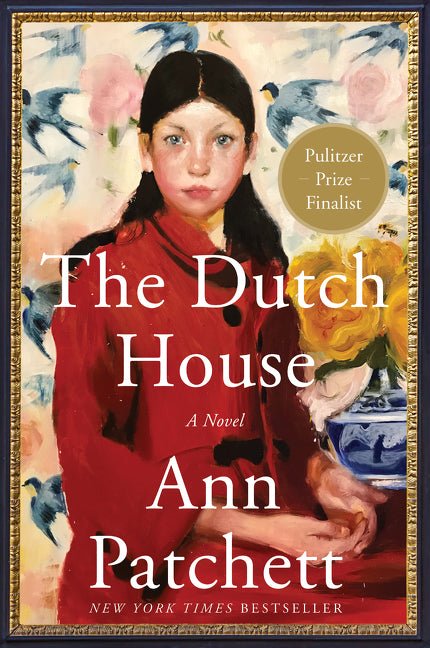
Ann Patchett has long been a master of the modern family saga, and her latest novel, The Dutch House, is no exception. I enjoy Patchett’s writing immensely because she always seems to be able to make an ordinary life extraordinary. Most people will not live a whirlwind life of fame and fortune; instead we will live relatively “normal” and, at times, somewhat boring lives. Patchett doesn’t write for the famous or for the rugged adventurers – she writes for and about ordinary people, and she does it with ease and grace.In The Dutch House, we readers are transported into the world of Danny and Maeve Conroy, two siblings with an unbreakable bond whose lives are also marred by tragedy. The Conroy family lives in an enormous mansion in Elkins Park, Pennsylvania (a suburb of Philadelphia) referred to as the Dutch House in homage to its original owners, the now-deceased VanHoebeeks.Early in the novel, ten-year-old Maeve and three-year-old Danny are abandoned by their mother Elna, a woman who has no other ambition in life than to help the poor and who, in consequence, cannot stand living in the opulent Dutch House. Elna’s departure leaves the door open for the patriarch of the family, Cyril, to remarry. His unfortunate choice of taking a young woman named Andrea as his second wife, and his untimely death when Danny (our narrator) is only a teenager, will ultimately lead to the expulsion of the Conroy children from the fairytale Dutch House and will alter the course of their lives forever.One of my favorite parts of reading this book was coming to truly love Danny and Maeve and to care about what was happening in their lives over the course of the five decades the book encompasses. As much as I loved the siblings, I despised their stepmother Andrea with a passion. The ability of an author to make us feel for the characters is crucial to the enjoyment and success of a story, and Patchett certainly doesn’t disappoint here. Because of her detailed, compelling, and heartfelt writing I felt completely immersed in the lives of the Conroys and savored each detail, from the reason for failed and strained relationships down to the story of the painting of Maeve as a young girl – the very painting which graces the cover of the novel.If you are a fan of Ann Patchett or of sweeping family sagas, give this wonderful book a read.

I'm definitely in the minority regarding "The Dutch House" by Ann Patchett.There was just so much sadness and anger permeating the cast of characters, it was difficult to enjoy the story.The mother's abandonment, the father's lack of involvement (except for taking Danny along to collect rents and watch him make repairs on his multiple apt. buildings), the total loss of the father's substantial estate by the children of his own blood, the years Danny spent in medical school and residency to satisfy his sister Maeve (despite the fact that he had no intention of ever being a doctor), the hostility between Maeve and Danny's wife, and more.So, I found the book to be pretty depressing. I wouldn't recommend it to my friends.
An excellent example of how skillful writing can provide a lovely reading experience. I’m so very glad to have had this experience.
This book is so well written, the characters are thoughtfully portrayed. It’s hard to find books that are as well written as this.
I had been recommended this book, time and again, since its debut and just couldn’t carve the time to start, let alone, finish it. The detail behind each character, the house included, is without precedent. I think, though, my greatest Takeaway was being part of the emotional awakening and awareness where so many times it’s not possible in real life, or we just aren’t able to experience it or see it in others.
It seems we all have stories of our childhoods that never leave us. When we are young we don’t really have control of ourselves and then it takes a lifetime to figure it out.
Loved the descriptive writing. A sad story of how lack of communication can destroy a family. My major problem was …yep, the mother who abandons her children but reappears later with her, what I felt, lame explanation of why she left. Then the wicked stepmother…again the daughter plays martyr…seriously?! The son is like me…I’d be angry, non accepting of what I deem the mother’s mental illness… Mother Theresa? I think a more realistic take would be .. “You might have given birth to me but I owe you nothing , you resigned as my mother! I forgive you but you are not a part of my life…it was your choice”. The emotionally distant father further damaged these two children. A very sad story for all. A lot of collateral damage this woman brought down on her innocent children!
Usually, when I read historical fiction, I find it hard to get into. But with The Dutch House, I was sucked into the story. I found it so interesting that this rich sibling duo was cast from all they knew, including their home, by their evil stepmother and had to endure hardship similar to their parents.I loved their bond; it was familiar, loving, supportive, and protective. And with that,, I found it relatable as my siblings and I are the same. They had to struggle some, but at the end of the day, they are lucky to have each other. They also push each other to do better and want more for themselves, even if it’s hard to hear. Danny and Maeve weren’t perfect children; they had flaws like we all do.One of my favorite things about the book is that the narrator is the son, Danny. I rarely read books with a male voice, and I enjoyed this perspective.Overall, I loved the book and can’t wait to read more from Ann Patchett.
If you’re looking for a good book, you should try THE DUTCH HOUSE.The two main characters are especially good, Danny and Maeve Conroy. Danny is the narrator. He went to medical school because his sister insisted. They have a closer relationship than most husbands and wives (nothing sexual though). Danny really wants to be a real estate investor, and he never does practice medicine. Danny gets married, but when he wants to talk to somebody about something personal, he talks to Maeve. As a result his wife Celeste hates Maeve, and the feeling is mutual.One would think the mansion their father purchased (The Dutch House) would have more of an impact on the story, but it’s barely mentioned. His wife hated the place, and she left the family; she said she loved their father, but that the poor people in India needed her more. The house was an obscenity.There’s also a maid named Fluffy, who’s more or a friend and stand-in mother than a servant. She tells Maeve and Danny how her father came to purchase the Dutch House. Patchett has a facility with minor characters. They just jump off the page. I felt like I knew Maeve, Danny and Fluffy; they were so real. Sandy and Jocelyn were also maids at the Dutch House. When they interact with Danny and Maeve, they sound more like friends than maids.If there’s a villain in the story it’s Andrea, Cyril Conroy’s second wife, who throws Danny and Maeve out of the house. But even Andrea is a sympathetic character toward the end.I don’t want to get hooked on one novelist, but Ann Patchett may be the exception to the rule.
ALERT: SPOILERS ahead. Frankly, I don't understand all the rave reviews regarding this book. A big part of my rating system depends upon how anxious I am to read each day. This was not one. I struggled to get through it and looked forward to finishing. This is not a bad book. In fact, I the writing is good, but I continued to wait for something to shake, rattle and roll and it never did.As other reviewers have pointed out, I could not wrap my head around one of the major themes, that being the abandonment of the children by the mother. Makes zero sense to leave your children in order to flee the country to help others overseas or anywhere for that matter! I couldn't stand the woman and she reappears later to take charge.Also, I never understood the animosity between Celeste and Maeve. Why? If anyone is clear on that let me know. Plus Danny spends years studying to become a doctor to please his sister and spend money from the trust only to get into real estate. Huh?I like stories that seem plausible and in the realm of possibility. This one is not in my opinion.Redeeming factors include the special relationship between the siblings and all of the descriptions of the Dutch House itself scattered throughout. Otherwise a disappointment.
The Dutch House by Anne Patchett is a fabulous book.The story is told through the eyes of Danny Conroy. He takes us on an incredible journey involving his parents, his sister, various housekeepers, step-mother, step-sisters, children and many, many others. The story starts not long after the end of WW2, and revolves around an old mansion, previously built and owned by the VanHoebeek family.There’s no need to tell you much about the story other than it’s a complex, layered and believable family saga covering 3 generations. This is my first book by this author (yes, where have I been?) and she just doesn’t miss a beat. Patchett paints such a rich picture, using just the right amount of words, placed exactly where they should be - I felt I was actually there. Even her descriptions of personal features, expressions and body posture, movement – were so accurate I felt like they were better than actually seeing the people myself.This one had me hooked from the beginning, and I was so sad it finished. In fact, I finished it only 30 minutes ago and feel quite emotional about the whole bloody thing. Why did it have to stop now? How can a book just jump into our life, take us on an incredible journey and then leave us, just like that? This was one of those books. I can compare it to my feelings of attachment to the Joad Family in Grapes of Wrath, I still wonder what they’re up to. I cared that much about them. Well it is the same here.Such precise passages like:“We overlay the present onto the past. We look back through the lens of what we know now, so we’re not seeing it as the people we were, we’re seeing it is the people we are, and that means the past has been radically altered.”For those of us who spend much of our time looking over our shoulder, this is really a passage to make us stop and think. Yes, memories, regrets, the past, feature heavily in this book.Also this little gem:“Thinking about the past impeded my efforts to be decent in the present”How good is that?This book will make you gasp, laugh and cry. For anyone who has been a father, mother, brother, sister…..or let’s just say a ‘human’. There will be something in this book that will resonate with you.This was my first audiobook and Tom Hanks’ narration was first class. Sorry this is such a gushy review but it is what it is.5 Wonderful Stars
[I like the rhythm of the first few paragraphs in this story:] The first time our father brought Andrea to the Dutch House, Sandy, our housekeeper, came to my sister's room and told us to come downstairs. "Your father has a friend he wants you to meet.""Is it a work friend?" Maeve asked. She was older and so had a more complex understanding of friendship.Sandy considered the question. "I'd say not. Where's your brother?""Window seat," Maeve said. Sandy had to pull the draperies back to find me. "Why do you have to close the drapes?"I was reading. "Privacy," I said, though at eight I had no notion of privacy. I liked the word, and I liked the boxed-in feel the draperies gave when they were closed.[To me, the rhythm of a written composition, and that includes stories, is every bit as important as the rhythm of a musical composition. And the rhythm of this start catches my attention.]But let's consider my reaction to this book. The first thing, of course, is the title. Not THE BOOK OF DANIEL or MAEVE, MY GUARDIAN, but THE DUTCH HOUSE. It validates one of my theories about well-written stories: those stories have the setting as the "master character", and the character of all the people contained in that setting is derived from that. It's something I developed as a result of studying scene design as a Theatre major. In order for the play to function properly, the setting must delineate the relationships of the characters, each one to the other, as the setting tells us how each of them confront each other, what they believe, what they enjoy, et cetera. The setting also encapsulates the movement of the story through time, from the beginning of the story's action to its final destination in any given location. I believe good stories do this, and good writers, like Ann Patchett, demonstrate this principal as their stories unfold. It's a Dutch house, but the occupants are Irish, and everywhere I've looked so far in this story, the setting created by Patchett validates my theory. It's the kind of story that should be read by anyone wanting to write a story, so they can learn from its example. I've read the first 99 pages, I love how it is so strongly a character-generated story, and I think it's brilliant! Absolutely incredible how good this novel is! I wondered why we heard early on about two people we knew little to nothing about until this late in the story: Maeve and Danny's mother and Fiona, [i.e.: Fluffy]. Structural control is amazing here. I was reading all the stuff about Danny's tutelage under Dr. Able, and toward the end of it, I was starting to think that it was straying a bit off topic when, BOOM! The author puts us back on the street across from The Dutch House! I kept thinking that mention of the first wife and Fiona were errors in structure until we met Fiona again at the Hungarian place! The plot is, as you know, very intricate, and if we were both reading this at the same time, I probably wouldn't mention the re-introduction of both characters.
I read half of The Dutch House on a Saturday evening and the second half on Sunday. The story was that good, the characters that interesting, the choices they made that captivating. I didn’t want to set it down. I just had to know how things were going to turn out, both for the characters I liked and those I detested. Here are a few thoughts that arose in my mind during the reading of this book (for my book club).When Mauve told her father “You didn’t ask me,” I stopped reading and reread it. And then I read it again. You know, that was the father’s problem. He did things for others and with others without asking them if they wanted to do it in the first place. I didn’t see him ask someone what they wanted, nor of-fer anyone choices between different options. He just directed things as they pertained to his own life path, as if he was al-ways in charge. Like buying the house and presenting it as a gift or magnum opus for his wife to just accept, with no say in the selection as modern couples do. That was just dumb. Sure, it was romantic, but come on. Really? The old days with husbands or fathers deciding, instead of seeing life as a journey with a partner, is just thoughtless to me. I find it hard to understand.So, I liked Danny. This was his story to tell, though I still wonder if this was a story of a person or a house. Let’s see. Danny points out that he was asleep to the world, as a child and young adult and husband. How about as a passenger, or student, or brother, or father? I wonder.There was so much that Danny didn’t see, didn’t ask about, wasn’t curious about. Easily seen things that he was just oblivious to. It doesn’t mean that he was stupid or self-centered, but he just didn’t look at things from someone else’s perspective. He lived life and didn’t question things or see things from other people’s point of view.I blame the father. Danny wasn’t allowed or didn’t know how to talk about women (his mother, sister, stepmother) with his father. How is it that a father (Cyril) could raise a son (Danny) and not give him opportunities to develop a skill at analyzing and talking about the opposite sex? That is just bad parenting. The father is supposed to be developing his son’s mind and preparing him for the future, one in which most sons marry someone and need to understand how to talk with (and dis-agree/argue with) them. He didn’t, and I fault him for that.Of course, the father did impart one useful life trick: “The things we could do nothing about were best put out of your mind.” I like that and try to live by that motto myself. Focus on the things you can change. And, somehow he learned that “You had to touch a hot stove only once.” So true! How many times have I seen someone act in a stupid way, and told myself that they’d never be more than an acquaintance to me, not a friend, not someone I’d choose to hang out with. How did I learn that? And from whom? I don’t know. Not my father.One thing did bother me, though. Danny seemed to re-member many times when his stepmother was kind to him, but he focused too much energy on the times when she wasn’t. He knew that this was not smart or productive, but he did it any-ways. Sure, that is typical of people, forgetting the good and remembering (and focusing on) the bad. It is why kids blame their parents for their own life’s failings and shortcomings.I can’t help it, but certain elements of this story made me think of my own life. I can connect with not having friends come over as a child. Norma and Bright didn’t have visitors, just as Danny and Mauve didn’t have friends over. No one to spend the night, or pretend with, or to run around with in the backyard, or to play hide-and-seek with. So lonely, only adults to communicate with, who seemed to be busy managing life and not imagining life (as kids often do). And when I found out that Kevin loved butterscotch Lifesavers, I smiled, because that is the one flavor I loved as a child. Loved! I have such fond memories of getting it from my grandma (though I didn’t like cherry). Did I tell others this? I don’t think so. I wasn’t allowed to ask for stuff, or encouraged to talk about what made me happy. Again, it’s the life my parents lived, and their choices that I now reflect on. Having a mother who is already dead and a father who will never read what I write, well, I am just talking to myself. And getting married on a sweltering hot July day. Yep, I did that too. It was 108 degrees on my wedding day, outdoors, with lots of family and a few friends sweltering in the heat. And when the father died at age fifty-three, it struck a chord with me, as I am fifty-three right now. No, I don’t expect to die this year. I am in excellent shape and wouldn’t even breathe heavily from climbing three flights of stairs. And being the iron in Monopoly. That was me as a child, every time. I always wanted to be the iron. No one else wanted it. It wasn’t sexy or coo...
Overall: A beautifully written novel about an unconventional family with strong characters. Themes of forgiveness, compassion, and family are strong throughout and this is a difficult novel to put down. 7/10Summary: The Dutch House is the story of two siblings, Maeve and Danny Conroy and their lives over several decades. The two are inseparable, bonded very tightly after their mother leaves home when they're very you. The Dutch House is their home, a 1922 mansion outside Philadelphia that their father, Cyril, a real estate mogul, bought fully furnished in an estate sale as a surprise for his wife. His wife hates everything about the house and flees to India to dedicate her life to the poor. Cyril remarries and there is a strained relationship between the stepmother and Maeve and Danny. The story follows their lives for over fifty years.The Good: I listened to this book as narrated by Tom Hanks and it was amazing. Probably the best audiobook I have listened to and he was the perfect voice for Danny's character. This novel reads almost like a modern day fairytale; it reminded me a lot of Hansel and Gretel. The characters are very well developed with lots of unique personality and the writing is wonderful throughout. Some suspense and sharp turns along the way and I had a hard time putting this one down.The Bad: There was a plot throughout but at the end I found myself wishing for more. I thought there would be a twist, some major surprise, or just a bit more plot so felt slightly let down when I finished. And though I felt like I got to know all the characters very well, I did not particularly love any of them.Favorite Quotes:"Do you think it's possible to ever see the past as it actually was?"“There are a few times in life when you leap up and the past that you'd been standing on falls away behind you, and the future you mean to land on is not yet in place, and for a moment you're suspended knowing nothing and no one, not even yourself.”“But we overlay the present onto the past. We look back through the lens of what we know now, so we’re not seeing it as the people we were, we’re seeing it as the people we are, and that means the past has been radically altered.”
Ms. Patchett does many good things in this book. Structurally, the beginning and middle are strongest. The actions and characters in the beginning are strong enough to carry the book. They have to because the ending happens quickly and, somewhat disappointingly for me, too easily. I'd have liked to have seen more conflict at the end. Or at least more difficulty. It's also interesting to read a book written by a woman in the voice of a man. In this era of accusations of "cultural appropriation" it's refreshing. A woman writing in a man's voice, or a man in a woman's for that mater, is refreshing and shows a side of the character that the reader might not expect. Danny doesn't often react like a typical male character in this book, but that may be because of the influence of his sister. The book handles Mauve's Type 1 diabetes well and shows how difficult it was in those days before Type 2 made it an industry. But there's one mistake pertaining to this. There's a scene in 1968 when Danny is at Columbia in which they test her blood. Personal blood testing devices were not available until 1980 or 1981. I know. I've had Type 1 for over 55 years. Maybe I'm wrong about the timing of the scene in the book. But you'd think some research would clear that up. The author probably asked a doctor. Doctors know diseases from books and charts. They don't live with them and in the day to day world of a chronic disease they know less than they think they do. Sorry, docs. But you're like a car dealership. Patients are the mechanics who deal with the car every day. But it's a sweet book and it makes you feel pretty good. She' a great stylist, a great novelist.
I love Ann Patchett's work and The Dutch House does not disappoint. The book is named for the 1922 home where Danny and Maeve, an inseparable brother and sister, grow up. The house becomes a character in the story with its see-through windows, and appearance of floating on top of the hill. Yet, even though the landscaping reflects the changing seasons, The Dutch House never changes. It's filled with treasures left by its previous owners who left during the depression, furniture and drapery that are never changed after Maeve and Danny's father buy the home at an auction. While all the other characters change and grow, The Dutch House remains a constant.Their mother is overwhelmed by the house and its ostentatiousness. After nine years, she up and leaves the house and her children, bringing Danny and Maeve even closer together. Eight-year-old Danny doesn't really know what's happening when their cold father introduces them to Andrea, a woman who will become their stepmother, bringing her own two daughters. In the world of bad stepmothers, Andrea is right up there as one of the worst, surpassing even Cinderella's stepmothers.Danny says, "The only thing our father really cared about in life was his work: the building he built and owned and rented out. He rarely sold anything, choosing instead to leverage what he had in order to buy more." So he left Maeve to tend to Danny. And he let Andrea take over the house, who went so far as to give Maeve's childhood bedroom away to her daughter while Maeve was at school, on top of firing the help the children had grown up with.When their father dies, through a system of wills and trusts their father bungled, Maeve and Danny are kicked out of The Dutch House by Andrea. They become acquainted with poverty for the first time in their lives. The only silver lining is an educational trust. Danny is basically forced to go to medical school by Maeve to use up as much of the trust as is possible, leaving little for Andrea’s daughters, a seeming act of revenge. The trouble is Danny only wants to follow in his father’s footsteps, buying up old buildings. He has no interest in being a doctor.The intensity of Maeve and Danny’s relationship is the highlight of the novel. For those of us who aspire to such relationships or know they are not possible, their tender care for each other over the years will tug at your heartstrings.Ultimately, this is a story about how a brother and sister’s love for each other transcends circumstances that would cause others to break. Death, revenge, illness, and socio-economic status all play a part in holding the story together. The surprise ending will pull your heart in all directions.Ann Patchett is a genius at dissecting family relationships. Her characters are rich and complex. You will hate some of them and love others. The rub is deciding if a particular character deserves hate, love, or forgiveness—or all three.
I have loved all of Ann Patchett’s books and I must say that this one is my favorite. I was hooked at the first sentence and remained hooked until the end. This is one of those rare books that you want to rush to finish, but at the same time you do not want it to end. Reading this book is like a master class in story telling and writing. And the author loves dogs and co-owns an independent bookstore! What more do you need to know to pick up this book?Set in suburban Philadelphia over the course of almost 60 years, this is the story of Maeve and her baby brother Danny. The story is narrated by Danny beginning when he is 8 years old. Maeve and Danny’s mother left the family and is apparently in India helping the poor. Their father Cyril made his fortune buying and selling properties. He is a mostly absent father so the children are raised by their housekeepers and previously a nanny. Cyril’s grandest purchase was the Dutch House, a ridiculously opulent mansion that intrigues the children and scares off their mother. The book opens with the appearance of Andrea, who will soon be their evil stepmother. Andrea only has eyes for the house and for her two younger daughters. When Cyril dies, Maeve and Danny discover that they are left with nothing. No home and no money, except a trust fund for Danny’s education. Maeve has already graduated college, has a job, and lives on her own. She pushes Danny to use as much of the trust as possible, which he does in spite of his own future plans. The story follows Maeve and Danny as they become adults, always haunted by their past and by the Dutch House.There are so many wonderful themes about family, forgiveness, relationships, and memory. Do we remember things as they really were or are memories colored by who we are? Both Maeve and Danny have different memories of their parents and also different experiences. A good part of this novel is about how the two of them put the pieces of their family together. It is also about the sacrifices they make for each other. This is a powerhouse of a book. The writing is perfect, the characters are interesting, and the story remains compelling all the way through. Unlike Ms. Patchett, I do not have the words to express how wonderful this book is. You will just have to read it for yourself!

