

The Kite Runner
 )
 )
Couldn't load pickup availability
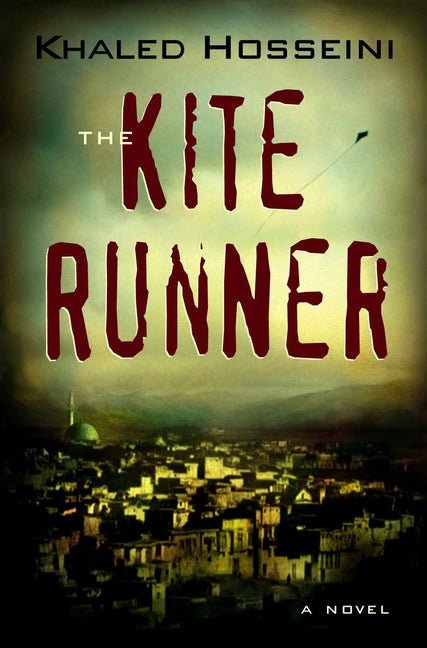
The #1 New York Times bestselling novel beloved by millions of readers the world over.
New York Times Readers Pick: 100 Best Books of the 21st Century
“A vivid and engaging story that reminds us how long his people [of Afghanistan] have been struggling to triumph over the forces of violence—forces that continue to threaten them even today.”—The New York Times Book Review
The unforgettable, heartbreaking story of the unlikely friendship between a wealthy boy and the son of his father’s servant, caught in the tragic sweep of history, The Kite Runner transports readers to Afghanistan at a tense and crucial moment of change and destruction. A powerful story of friendship, it is also about the power of reading, the price of betrayal, and the possibility of redemption; and an exploration of the power of fathers over sons—their love, their sacrifices, their lies.
Since its publication in 2003 Kite Runner has become a beloved, one-of-a-kind classic of contemporary literature, touching millions of readers, and launching the career of one of America's most treasured writers.
Share
Book Details
- ISBN
- 1573222453
- Binding
- Hardcover
- Authors
- Khaled Hosseini
- Publisher
- Riverhead Books
- Published Date
- June 2, 2003
- Language
- English
- Pages
- 336
- Physical Info
- 1.13 in H x 9.28 in L x 6.36 in W (1.22 lb)
I read this book a few years ago. It moved me then and it amazed me the second time around. I hated for it to end.
Great book!! Well written about a young boy!!I plan to reread it!!
Such a wonderful, beautifully written tale.
Excellent as all his books are. I am rereading all his books.
Better than I remembered
- 5 stars: 15 (75%)
- 4 stars: 4 (20%)
- 3 stars: 1 (5%)
- 2 stars: 0 (0%)
- 1 star: 0 (0%)
I read this book a few years ago. It moved me then and it amazed me the second time around. I hated for it to end.
Excellent as all his books are. I am rereading all his books.
Such a wonderful, beautifully written tale.
Great book!! Well written about a young boy!!I plan to reread it!!
Better than I remembered
Story follows a young man’s life as he grows up in Afghanistan. A harness of growing up there and the possibilities of a new life in the US.
Tragic. A great read but a horrible story.
This is a heavy book to read! It is a great read!
This is a great book! Very well written and keeps your interest from the start. My only critique is that there are many, many Afghan words throughout the book, and most are not easily discernible. I wish there’d been a glossary or something like that added so that I could translate them to English.
The Kite Runner is a poignant historical fiction tale set against Afghanistan’s turbulent backdrop, following Amir, a boy wrestling with guilt and loyalty, and his steadfast friend Hassan. The coming-of-age journey of Amir, Hassan, and later Sohrab gripped me—father-son drama, Hassan’s selfless sacrifice, and Amir’s hard-won redemption hit all my sweet spots. The historical weave and emotional stakes, like gaining a father’s fleeting approval or overcoming betrayal, shone bright. Yet, some turns—like a villain’s convenient reappearance—stretched believability, piling on drama when subtlety might’ve sufficed. The prose, while clear and engaging, lacked the lyrical flow I crave, though it never bogged down. This story surprised me, delivering more depth and heart than I’d expected—a near-perfect blend of what I love in a book. Standout lines linger: “I wondered if that was how forgiveness budded, not with the fanfare of epiphany, but with pain gathering its things, packing up, and slipping away unannounced in the middle of the night,” and “A man who has no conscience, no goodness, does not suffer.”
The book got off to a slow start but definitely picked up as I got into it. The story provided an enlightening and insightful look into Afghan culture. It’s sad most can turn a blind eye to the horrors of war and oppression going on around the world. Trauma does have a lifelong effect on children regardless of race, color, or creed.
A well written tale of a bond like no other, brotherhood. This tale has family secrets, taken to the grave. What parents sacrifice for their kids. If you are a parent, you have an understanding, anything for them.This tale is both parent and child points of view, time line is spot on, plot has you turning the pages, oh bring a kleenex.
I did not like this book when I first started to read it. It took almost half the book before I really got into it. Very good character development and sounds historical correct.Puts a face on the Afghan people and their war.
I first read this book 20+ years ago, and it moved me in a way I’d never been before, by a book. I read it several times in the years after that. I just read it again - my 27-yr old daughter and are reading it together. I could not put it down. Again, I read it in two days. I can’t wait to discuss it with her. Such a heart wrenching story, but so beautifully written. Now I’ll have read Thousand Splendid Suns, again. Enjoy!
I avoided reading any Amazon reviews about this book before having finished it myself so I would go into the book with no prejudices. Yes, it is now February 2025 and despite having heard of this book for many years, I only got around to reading it. The first third of the book really drew me in and maybe if that had been the book the whole way through, I'd give this book 4 or 5 stars. Unfortunately, the second third and the final third of the book were less interesting. There are many, many stories of immigrants coming to the United States and of course, we empathize with stories of assimilation or missing the old country, the old way of life. However, these assimilation stories are so abundant that doing it yet again hardly makes for interesting subject matter, especially if the assimilation process isn't all that unique. The last third of the book: this actually felt like I was reading a novel with the whole plot twists carefully outlined. In other words, it all felt staged for effect. The writing here seemed to be by a different author. It seemed to be over-the-top and the young boy Sohrab didn't behave like an innocent little boy, but almost like an American teenager after getting cyber bullied and doing those teenager things that we all come to see play out in American society. But how can that be? He's only known Afghanistan his whole life and only a small part of it. The last 10% of the book didn't have me gripped to see how it would end. Rather, I just wanted to finish the book as, by that point, the charm of the book had long since left. The final scene between Amir and Sohrab... ok, so now they're bonding, but I didn't care by that point. It felt like the author tried too hard to hit the right heart strings for a pretty ending, but it didn't work for me. It just ended and I wanted to come here to read Amazon reviews to see if I was alone in being disappointed. Seems like most people gave the book high praise, but those that gave 3 stars... yeah, they get me. We're seeing the same things about why the book didn't work.
In Khaled Hosseini’s novel, The Kite Runner, the protagonist Amir agonizingly attempts to redeem himself for his childhood transgressions in order to live a holier life as an adult, solidifying that the only way to redeem oneself is to stand up for what one believes is right.In the beginning, Amir is living in Kabul, Afghanistan with Baba, his father, Ali, his father’s servant, and Hassan, his best friend who happens to also be Ali’s son. Kite-fighting is a traditional sport in Afghanistan and Amir and Hassan were preparing to win the upcoming tournament. Amir hopes that if he were to win the tournament he would win Baba’s affections. When Baba speaks about Amir to his close friend, Rahim Khan, his frustration with the way Amir is growing up becomes evident. Baba strongly believes that a “boy who can’t stand up for himself becomes a man who can’t stand up for anything” (Ch.3, pg.22). Baba tries to instil this idea in Amir, but rather than sticking up for himself, Hassan is the one who always fights Amir’s battles.Amir ends up winning the kite-fighting tournament and Hassan goes to run down the kite for him. Amir looks to find Hassan and is horrified to find that Hassan has been raped by a boy named Assef, who consistently torments Hassan, for being a Hazara (an ethnic minority in Afghanistan), and Amir, for being friends with a Hazara. This was the moment Amir would be able to repay Hassan for protecting him, even when Amir hasn’t always protected Hassan back. Amir realizes that he had “One final opportunity to decide who [he] was going to be. [He] could step into that alley, stand up for Hassan [...] Or he could run. In the end, [he] ran” (Ch.7, pg.77). Amir never says anything to Hassan about what he saw and decides to avoid Hassan all together, in an attempt to relieve himself from the guilt he feels. Later, Baba and Amir move to America to escape from the war-torn Afghanistan, while Ali and Hassan choose to stay back. Amir originally thought that this would completely rid him of his feelings of guilt towards Hassan, but as time passed Amir only felt more remorseful. As an adult, Amir finds out Hassan has been killed and that his son, Sohrab, has been taken by the Taliban from an orphanage in Afghanistan. Amir believes that if he gets Sohrab back it will atone him for his mistreatment of Hassan. Once Amir gets Sohrab back, Amir asks if he’d “like to come live in America with [him]” (Ch.24, pg.320); and, promises that Sohrab would never have to go back to an orphanage. However, when the two get to the American embassy, Amir breaks his promise to Sohrab. Again, Amir chooses not stand up and Sohrab is almost sent back to an orphanage. Luckily, a U.S. immigration department worker finds a way for Sohrab to go home with Amir. At the end of the novel, Amir and Sohrab see kites outside, which prompts Amir to buy one for Sohrab. They find a kite to battle, win, and this marks the moment Sohrab truly feels happiness again. By getting the losing kite for Sohrab, the same way Hassan got the kite for Amir, symbolizes that Amir has finally chosen to stand up for what he believes in and has found redemption for his past.Hosseini captivates his readers by making them feel as though they are going through Amir’s journey to find redemption with him. Reading this novel also helps to bring two seemingly-opposite cultures together. This novel highlights that the only way one can truly be atoned for their sins is by standing up for what they believe in and that is a lesson, no matter where one comes from, people can get behind.
*SPOILERS AHEAD* -the quotes are all from the book and this review is based on the audio book read by the author.-~~~~~~~~~~~~~~I only started the audio book yesterday and I couldn't turn it off until now because I finished it a few seconds ago. It is the first time I read a non-British or non-American novel and to tell the truth, I listened to the audio book without having high expectations since I knew this novel was a best seller and I like to stay away from best sellers because they are, most of the time, a disappointment.However, this is not the case. The Kite Runner by Khaled Hosseini it is certainly the most delicious piece of literature I've had the pleasure to lay my eyes on (or listen to), an outstanding novel that will be remembered for many generations to come...it will always be in my mind and heart, to say the least.I have tears in my eyes right now and my heart is swelling with overflowing emotions. The suspense made my heart skip many times, but the ending left a satisfied smile plastered on my face and I don't know what else to say because my mind is busy remembering those precious and cherished times from the main character's past as if they were my own memories. I feel like I went to another world and lived Amir's life and came back to this life, wondering about my own life too.The kite runner was so good, so sad, so real. There were no perfect characters and no imperfect characters. They all were human, they were despicable, they were lovely. I read this book or I should say, I listened to this book like when I eat my favorite cake: I can't stopped eating it and the only most important thing in this world is that small moment of pleasure, nothing else matters.Many people were mad at the main character because they thought he was heartless or committed many mistakes. We have to keep in mind that Amir was only a kid longing for his father's love, so everything that mattered to him was to make his father to look at him as a dear son, this just shows us the huge impact a father/mother's treatment can make to their children's lives. Although Amir was only a kid, that's no excuse for the cruel things he did to his best friend, the ever so kind and gentle soul, Hassan. His love and loyalty towards Amir never wavered even though he knew about his betrayal and everything he's done. He always loved him unconditionally. Hassan was my favorite character, he reminded me of Petey from another great book "Map of the harbor Islands".I cried for Hassan as if he was my best friend, I even wished to meet him, to be greeted one day by a man with such a pure soul and gentle smile like his. I admit I was mad at Amir many times for the things he did or I should better say, for the things he didn't do for Hassan, like rescuing him from that horrible time..." on a frigid overcast day in the winter of 1975" ...I wasn't mad at the fact that he was afraid, he was only a kid so it's understandable but I was mad at how good he was at pretending he didn't know nothing afterwards or that he was worried more about the blue kite than about his friend's condition, or so I thought.I wondered many times how I would react in Amir's place...that's why I couldn't hate him like others do...because he was just human and humans have feelings. We are selfish sometimes, we feel jealousy and envy, we are cowards or at least have something we are afraid of, we lie, we steal, we hurt, we love. Life becomes beautiful where love is involved. I believe that we should live our lives in love with the world and the people in it and not waste our short life by hating and rejecting people just because they are different. This book dealt with many issues of hate, status, politics, religion, poverty, wars, sins, the importance of your bloodline but most importantly, the importance of redemption and love over everything else."...there is a God, there always has been. I see him here, in the eyes of the people in this [hospital] corridor of desperation. This is the real house of God, this is where those who have lost God will find Him... there is a God, there has to be, and now I will pray, I will pray that He will forgive that I have neglected Him all of these years, forgive that I have betrayed, lied, and sinned with impunity only to turn to Him now in my hour of need. I pray that He is as merciful, benevolent, and gracious as His book says He is."Amir discovered later on that his life has been like a lie because his father kept a secret from everybody...this cost the suffering of many people, including himself. Amir also made many people suffer because of his lies and betrayal..."like father, like son""But better to be hurt by the truth than comforted with a lie."Amir suffered for the things he did, his conscience didn't leave him alone during all his life. He physically and mentally grew up and changed from a selfish, afraid boy to a responsible, valiant man. I forgive him because I also love him. :)"A boy who won't stand up for himself be...
At once dark and illuminating, contemporary and historical, opaque and transparent, The Kite Runner is a shimmering coming-of-age story set against the backdrop of the last thirty years of Afghan history. Weaving a rich tapestry of literature using many brilliant and contrasting threads, Khaled Hosseini tells the complex tale of a young Afghan-American at conflict with both himself and his environment.The Kite Runner is most importantly about the cracks and fissures that inevitably develop in human relationships, whether between a boy and his stoic father, a young man and his new wife and eccentric in-laws, or a deeply troubled boy-man and his best friend. Indeed, human frailty is on full display in what is already regarded as a classic of contemporary Afghan-American literature.Clearly a gifted novelist, Hosseini both entertains and edifies in this his first major work. Excellent character development, vivid imagery, and a flowing, unrestrained style characterize the author's impressive literary debut. He infuses his characters with such passion, his scenes and dialogue with such feeling, and his story with so many twists and turns. Just as surely as we experience Hosseini's considerable gifts as a writer, though, we struggle to warm up to The Kite Runner's deeply flawed narrator, Amir.Early in Amir's recounting of the events that shape his life, we learn that he suffers from many of the same insecurities we all experience while growing into adulthood. During his early years in Kabul he struggles to gain his larger-than-life father's affection. In Amir's mind, he never quite measures up to his father's lofty expectations. Instead, his 'Baba' remains cold and distant, and only when Amir wins a sort of aerial combat with kites known as 'kite running' - a custom in the wealthier Kabul suburbs we learn - does Amir finally gain his father's approval. In the process, though, Amir betrays his best friend (and servant), Hassan, and remains stubbornly at war with himself.Hassan, perhaps the most striking of Hosseini's characters, embodies the many qualities and attributes Amir admires. A warm, gentle soul without an ounce of guile, Hassan repeatedly demonstrates his loyalty to his Agha (master), Amir. While valuing his companionship, Amir secretly resents Hassan's innocence and the way in which he seemingly glides through life while easily earning praise from Baba. Amir rewards Hassan's unflinching commitment by treating him at times as a brother and at times as a rival. Amir subjects Hassan to a kind of benign cruelty, one moment manipulating him, the next offering him his love.Interestingly, by birth Hassan is relegated to the lower tier of Afghanistan's caste system. The product of a sexual liaison between Baba and a peasant woman, Hassan is born hare-lipped and poor - two strikes in a rigid, intolerant Afghan society. Yet, he is infinitely rich in so many ways. Hosseini imbues Hassan with those qualities that make the Afghan people great - strength, pride, and resiliency. Indeed, the remainder of Hassan's short life in Afghanistan and subsequently in Pakistan parallels the fall of a proud society of Afghan people - first to the Soviets in the 1980s and then to the Taliban in the 1990s.By contrast, Hosseini's Amir is a study in contradictions. While Amir persists in reminding Hassan of his low station in Afghan society, he helps him learn to read and write. Nevertheless, throughout the story the two remain true to the Cain and Abel roles to which Hosseini assigns them. Amir eventually leaves Hassan to a brutal assault at the hands of the Faustian Assef. He then enters his adulthood regretting this betrayal of the one individual whose love for him was unconditional.The Kite Runner is first and foremost a story of redemption... of a boy's becoming a man, recognizing only once it is lost all he had in a unique sibling relationship. Amir ultimately atones for his youthful failings. By saving Sohrab, Hassan's son, from Assef and then the hopelessness of life in a Pakistani orphanage, Amir eventually rewards Hassan for his loyalty, sacrifice and love.Amir eventually adopts Sohrab, and the circle is complete. Sohrab will ultimately enjoy the many privileges that his father was denied both by Amir and an unforgiving Afghan society.Hosseini crafts a beautiful story, both entertaining and instructive. Through the dual lens of Afghan politics and the experiences of an extended Afghan family we learn so much about the Aghan people and their heritage. In this masterpiece, the reader is taken on a magical journey from Afghanistan to America (and back).Since as a nation we remain deeply invested in Afghanistan, the author's timing could not have been better. Indeed, Hosseini helps us gain an appreciation for this remote country and its culture during yet another turbulent period in its modern history.A superb first novel! We can only wonder what this magnificent author will do for an encore...
The guy who wrote it is a physician and the book is fiction. It would be interesting to know if it is at all autobiographical. I just looked up on the Internet:[...]Doesn't sound strictly autobiographical. Well, the guy can write good fiction--I can't believe this is his first book. This book has a great plot, great characterizations and it draws you in and keeps you hooked. One of the blurbs on the book said that this book haunted them for days afterward. I can understand that.It's about a boy who grows up in Afghanistan, with his father, a manservant and the servant's son. His mother passed away during childbirth and the servant's wife ran off. So the boy and the servant's son are good friends, but the servant and his son are Hazara, which I suspect is somewhat like being black in America. They are "less than". They are not educated, generally speaking, and are discriminated against. So the boys are friends when Amir, the main character, is home from school. But he would never really claim the Hazara boy, Hassan, as a friend in public. The book, roughly divided in thirds, would be like this: First third of the book: childhood and growing up in Afghanistan, second third of the book would be arriving in America and adjusting to American life and his much-changed relationship with his father as a result of their reduced circumstances in America and the last third of the book is about Amir's return trip to Afghanistan. His relationship with his father is troubled. It seems that he is not the boy that his father wanted or planned on. He can never fulfill his father's dreams and they have little in common. His father has a friend, Rahim Khan who visits and befriends the boy and gives him good advice. And he has his friendship with Hassan, the servant boy. But something tragic happens, which I won't tell here, which leaves Amir with lifelong guilt and self-hatred. It's not enough that his father hadn't loved him fully; he's now filled with self-loathing and trying to pretend that everything is okay in his world and keeping his shame all bottled up inside. His return to Afghanistan is a chance at redemption and is very action-packed and has many twists and turns. The book surprised me, often, which I really like. I have read so many books that to be surprised is, for me, the sign of a really creative author.I feel like if I say much else about the book, I really will ruin it. I will say that there is violence and tragedy-this is the Middle East we are talking about. But there are only a few incidents-it's not like the whole book is one bloody war because they basically leave when things start to fall apart. He comes back when the Taliban are in charge and his description of them, and their actions, are very enlightening. Their actions are not spiritual in any way that we would recognize-quite the opposite. But to see them depicted in fiction, and to hear Afghani characters despise them and what they have wrought on their country is good, I think. I believe that Afghan mothers want what mothers want world wide-for their kids to be healthy and have a chance at education and a happy life. And for the most part, few Afghans have that and I feel a deep sense of sorrow about that and my good fortune at being born in this country. That being said, the book is not deeply, horribly sad. It does have its sad parts, it does have its happy parts. It's a great tale written by an author who is very gifted. He writes very well, has a good tale and good characters. We've all read "coming of age" tales about Western boys (in school if nowhere else)-this is like an Afghan version of that. I would recommend this book and I would recommend starting it on a weekend where you'll have few interruptions.
This book offers a unique fresh look into the lives of the Islamic people of Afghanistan. There are four aspects of the novel that I would like to point out.First, the novel is built around interpersonal conflicts nested against the political turmoil of Afghanistan, which in many ways reflects and parallels the turmoil in the lives of the characters. We see Amir and his father, the priviledged wealthy Sunni family, contrasted with Ali and Hussain, the poor servant Shi Hazzara family. We see the fall of the monarchy, the feeble attempts at establishment of a republic, a civil war, and the rise of the Taliban from the ashes of the civil war. The lives of all the characters are greatly impacted not only by their personal relationships but also the major political changes happening in the country. This is the great theme of Tolstoy's War and Peace where war is the ever present background that impacts interpersonal relationships and personal decisions.Second, the plot twists are integrated with the cultural and religious aspects of the community. The Shi Hazzara are an underclass and thus are treated cruely and kept in indentured slavery. Ali's father has an illegitimate son, Hussain, with a Shi Hazzara woman, and whereas he seesm to love and be proud of Hussain, he does not allow Hussain to go to school or rise above the level of a simple house-boy.Throughout the book, the culture of Islam in Afghanistan directs many very personal decisions and relationships.Third, the story is highly structured. Hosseini carefully wrote this book so that parallel actions and patterns arise. There are so many of these structured contrasts that they dominate the book in many ways. For example the evil half German boy who loves Hitler rapes Hussain and then later sodomizes his orphaned son. Both Ali and Hussain lose their mothers immediately after they are born. The household is composed of a servant man and his son and a master and his son.Thomas Hardy, the English novelist, also wrote these type novels where for every action there is a reaction, for every pattern there is a corresponding similar pattern revealed elsewhere in the book. Structured novels create injustices which are addressed in the end to make the reader feel good, with the belief that there is justice in the universe. Structered novels create characters and situations that must be pulled together and addressed in the end so that the reader does not have any lingering questions or concerns or sense of uneasiness. Hosseini writes a very structured novel here that ensures final justice and resolution so the reader can finish the last page and go into undisturbed sleep, thinking that the cosmic balance of justice has been restored.Fourth, the story follows the age old path of the fall from innocense to the earned redemption for sin. Amir and Hussain are in Eden in their youth, playing together, eating fruit from the orchard. The realities of class and history begin to emerge but it is envy that eventually disrupts this relationships. Amir envies Hussain, fails to defend Hussain while he is being raped, and then arranges that Hussain and his father be sent into exile from the family employment because Amir can not face his guilt. However the novel allows Amir the opportunity for redemption and to address the fall from Eden. He can't save Hussain, who is killed by the Taliban, but he can save his young 4 year old son. The journey from California, to Pakistan, to Afghanistan's orphanages and the trials and tribulations Amir undergoes is the redemption and the restitution he pays to regain his innocense, symbolized by the innocent little son of Hussain.The reason I did not give the book a "5" is that it was too structured for me. It was too coincidental and the ending was too neatly pulled together for me. I apppreciate lose ends and untidy endings and Hosseini decided to not to leave any lose characters or plot issue unresolved. I wish life had such a way of resolving lose ends, but in reality it doesn't. Thus Hosseini's interesting book becomes more of a myth or morality fable than a reflection on reality.

